
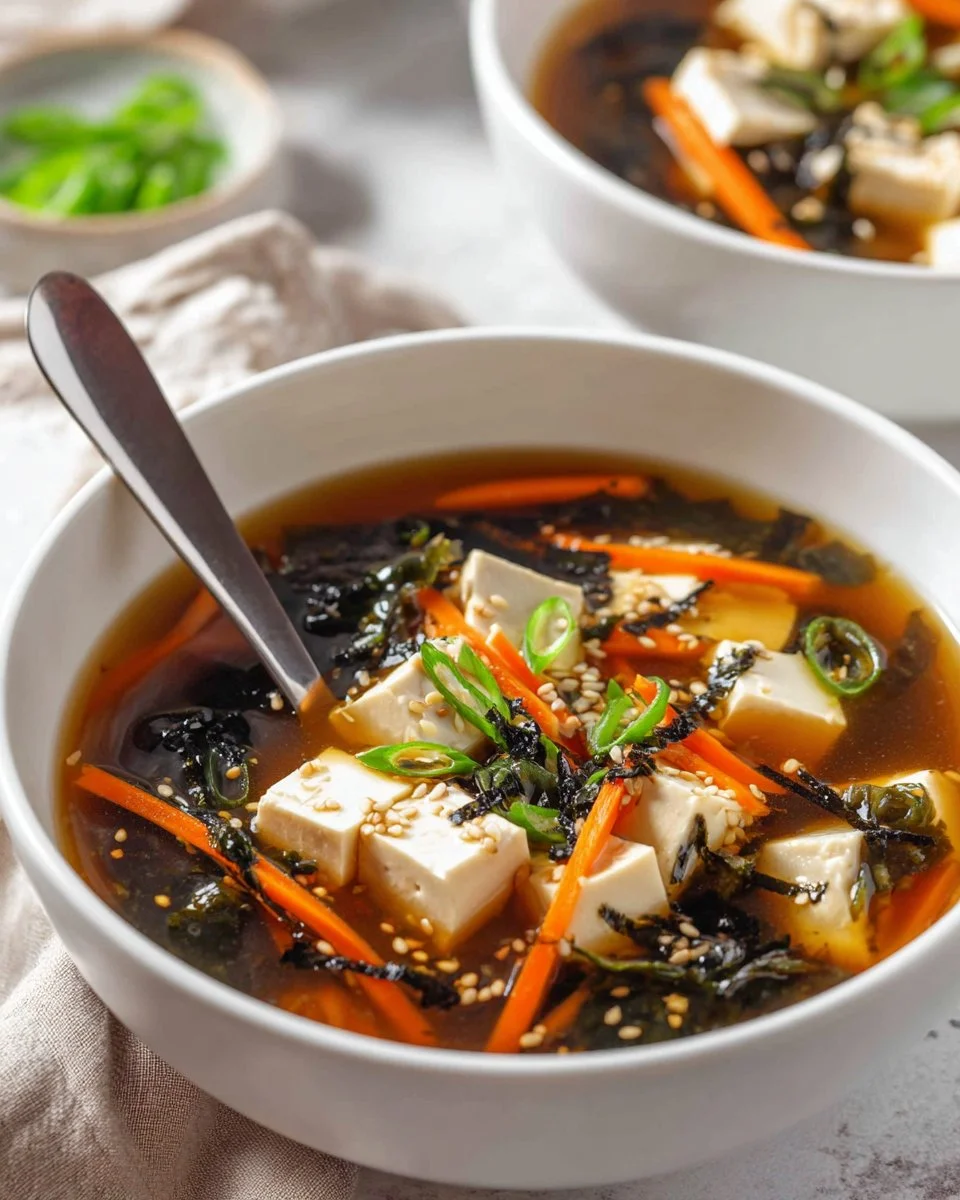
Nothing warms you up quite like a soothing bowl of soup, especially on chilly evenings or after a long day. This delightful dish delivers a comforting experience that tantalizes the senses with rich umami flavors and velvety textures. As you prepare the ingredients, your kitchen fills with an enticing aroma that promises a nourishing experience. The combination of soft tofu, earthy mushrooms, and seaweed creates a hearty yet light soup, perfect for any occasion. Whether you’re seeking a quick family meal, a cozy dinner for one, or a healthy meal prep option, this dish effortlessly fits the bill. Its vibrant flavors and minimal cooking time make it a fantastic mid-week dinner choice. Packed with high protein and nutritious ingredients, you can savor every spoonful with a sense of well-being. Each bite is a reminder of how simple ingredients can come together to create something truly special.
Why You’ll Love This Recipe
You’ll love this recipe for its simplicity and flavor profile. The crunchy vegetables and silky tofu marry perfectly, offering a satisfying contrast in texture. Plus, it’s not only a quick fix but also a wholesome option brimming with nutrients. Packed with plant-based protein, this dish is an excellent way to nourish yourself without sacrificing flavor. Additionally, the base of the soup is incredibly versatile, allowing you to customize it further according to your tastes or dietary preferences. Easy to whip up on busy nights, this recipe also makes a fantastic meal prep option, letting you enjoy a comforting bowl of goodness throughout the week. What’s more? It’s a meal that even your kids will love, making it a perfect addition to your collection of easy dinner ideas.
What Makes This Recipe Special
What sets this dish apart is its deep-rooted cultural significance, originating from traditional Japanese cuisine. The use of miso paste not only adds depth but also a fermented element that promotes gut health. Dried mushrooms and kombu infuse the broth with a rich and savory flavor, elevating it well beyond the typical vegetable soup. The simplicity of the ingredients means that even novice cooks can create something delicious without much fuss. It’s a showcase of how wholesome, unprocessed foods can work harmoniously to deliver comfort food recipes that nourish both the body and spirit. This miso tofu soup caters to various dietary needs, being vegetarian-friendly while offering a high-protein meal option that can support an active lifestyle.
Ingredients
water: Essential for creating the soup base and diluting the flavors of the ingredients.
dried kombu: Adds an umami depth to the broth with its natural ocean flavors.
dried shiitake mushrooms: Imparts a rich earthiness while boosting the soup’s umami.
carrot: Offers a touch of sweetness and vibrant color, enhancing visual appeal.
dried wakame seaweed: Brings a delightful texture and subtle sea flavor, rich in nutrients.
soft or silken tofu: Provides a creamy, melt-in-your-mouth texture while adding protein.
grated fresh ginger: Adds a warming spice note and aids in digestion.
garlic: Infuses the soup with aromatic depth and adds flavor complexity.
white or yellow miso paste: The soul of the soup, delivering savory flavors and probiotics.
soy sauce: Enhances the overall flavor with a hint of saltiness and depth.
toasted sesame oil: Adds a nutty aroma and richness, finishing the dish beautifully.
scallions: Fresh garnish that brightens the dish and adds crunch.
nori: Provides an additional layer of umami and a touch of ocean flavor.
sesame seeds or chili oil: Optional garnishes that add texture and visual interest.
How to Make Miso Tofu Soup
STEP 1. Make the dashi base. In a pot, combine water and dried kombu, soaking it for about 30 minutes to extract flavor.
STEP 2. Heat the broth. Bring the kombu-infused water to a gentle simmer over medium heat.
STEP 3. Add aromatics and vegetables. Stir in sliced carrots and rehydrated shiitake mushrooms, simmering them for 5-7 minutes until they soften.
STEP 4. Add wakame and tofu. Gently add dried wakame and cubed tofu, cooking for another 3-4 minutes until heated.
STEP 5. Add the miso paste. In a small bowl, dissolve miso paste in a ladle of broth before stirring it back into the pot to avoid clumps.
STEP 6. Season and finish. Stir in soy sauce and toasted sesame oil, taste for seasoning, and adjust if necessary before removing from heat.
Pro Tips
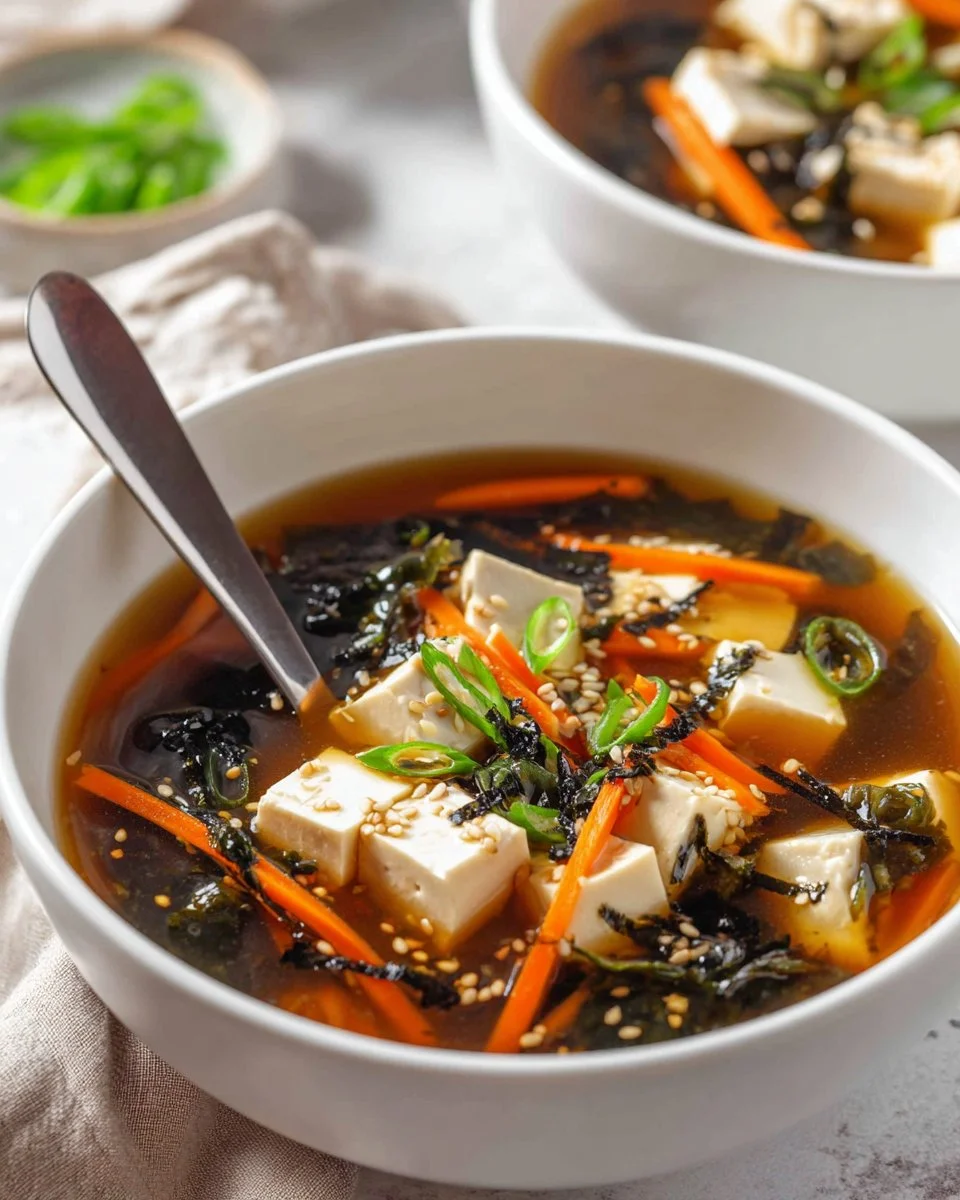
For optimal flavors, allow the kombu to steep longer in cold water, ideally up to a few hours. This increases the umami richness without boiling the kombu, which can lead to bitterness. When working with tofu, consider using super soft or silken varieties for smoother texture and taste. It’s essential to add miso at the end of cooking to preserve its beneficial probiotics. If you prefer a spicier kick, incorporate chili oil directly into the soup for a vibrant finish. To enhance the visual appeal of the dish, garnish with fresh sliced scallions and a sprinkle of sesame seeds just before serving. Choosing fresh ingredients, especially organic vegetables, can significantly elevate the overall flavor and nutritional value of your soup.
Common Mistakes to Avoid
One common mistake is boiling the kombu, which can make the broth bitter; simmer it gently to extract the best flavors. Avoid adding miso paste too early, as high heat can destroy its probiotics and flavor nuances. Handle the tofu gently when stirring to prevent it from breaking apart too much. Using water without the dashi base may make the soup taste flat, so ensure to use a flavorful stock or kombu for richness. When adding wakame, monitor the cooking time, as it expands and can dominate the dish if left too long. Finally, taste your soup before serving and adjust the seasoning; miso paste can vary in salinity.
Variations
• Add spinach for extra greens and nutrition.
• Include edamame for a boost of protein and color.
• Substitute the mushrooms or add more varieties for unique flavor profiles.
• Use zucchini or bell peppers for additional crunchy texture.
• Experiment with different types of miso for a distinct flavor profile.
• Try adding a squeeze of lemon or lime for a fresh zing.
Serving Ideas
Pair this warm bowl of goodness with a side of steamed rice or a fresh green salad to complete your meal. Alternatively, serve with homemade dumplings for a delightful fusion experience. You can also enjoy it alongside crusty bread for dipping or with a selection of pickled vegetables that complement the soup’s flavors. If you’re hosting a meal, consider offering garnishes on the side, allowing guests to customize their bowls with nori, sesame seeds, or chili oil, making it social and interactive.
Meal Prep & Storage
This soup is perfect for meal prep, as it stores well in the refrigerator for several days. To maintain optimal texture, store the soup without the tofu and add it right before serving. Use an airtight container to keep it fresh, and reheat gently in a pot on the stove or in the microwave. If you plan to freeze it, consider portioning it into individual servings for easy access. Thaw overnight in the refrigerator before reheating. Keep in mind that the texture of the tofu may change slightly after freezing, but the flavor will still be delicious.
FAQs
Can I use different types of tofu?
Absolutely! Firm or extra-firm tofu can be used, but silken tofu offers the best texture for this soup.
Is this soup vegan?
Yes, this recipe is entirely plant-based if you ensure the soy sauce is also vegan-friendly.
Can I make this soup gluten-free?
Yes, simply substitute tamari for the soy sauce to keep it gluten-free.
How long can I store leftovers?
In the fridge, this soup can last up to 3-4 days. For longer storage, freeze it for up to 3 months.
What can I add for more protein?
Consider adding edamame, tempeh, or chickpeas for a protein boost while keeping the dish plant-based.
Conclusion
A warm bowl of soup can be a comforting staple in your dining routine, and this particular recipe is a delightful way to enjoy wholesome ingredients. With its robust flavors and soothing qualities, it stands as a versatile dish that can easily be made a part of your everyday meals or special occasions alike. Grab your ingredients and experience the joy of making this nutritious dish today!

Miso Tofu Soup
Ingredients
Soup Base
- 6 cups water Essential for creating the soup base.
- 1 piece dried kombu Adds umami depth to the broth.
Main Ingredients
- 1 cup dried shiitake mushrooms Imparts rich earthiness.
- 1 large carrot, sliced Offers sweetness and color.
- 1 cup dried wakame seaweed Brings texture and nutrients.
- 12 oz soft or silken tofu, cubed Provides creaminess and protein.
- 1 tbsp grated fresh ginger Adds warmth and aids digestion.
- 2 cloves garlic, minced Infuses aromatic depth.
- 3 tbsp white or yellow miso paste The soul of the soup, rich in flavor.
- 2 tbsp soy sauce Enhances flavor with saltiness.
- 1 tbsp toasted sesame oil Adds nutty aroma.
- 2 tbsp scallions, sliced for garnish Brightens the dish.
- 1 sheet nori, cut into strips Adds an additional umami layer.
- to taste sesame seeds or chili oil, for garnish Optional toppings for added texture.
Instructions
Preparation
- In a pot, combine water and dried kombu, soaking it for about 30 minutes to extract flavor.
- Bring the kombu-infused water to a gentle simmer over medium heat.
- Stir in sliced carrots and rehydrated shiitake mushrooms and simmer for 5-7 minutes until they soften.
Cooking
- Gently add dried wakame and cubed tofu, cooking for another 3-4 minutes until heated.
- In a small bowl, dissolve miso paste in a ladle of broth before stirring it back into the pot to avoid clumps.
- Stir in soy sauce and toasted sesame oil, taste and adjust seasoning if necessary before removing from heat.