
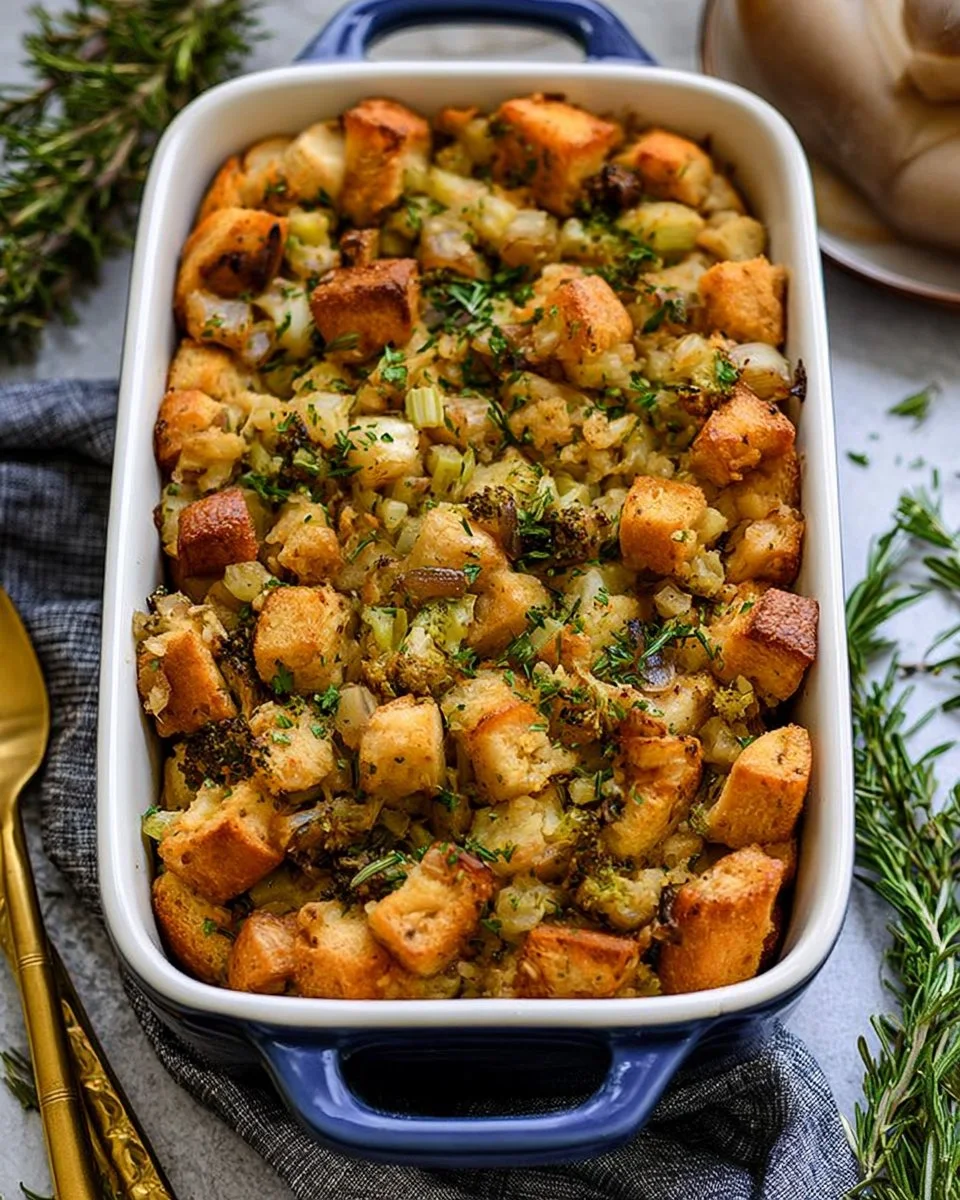
As the holiday season approaches, the anticipation of gathering around the dinner table grows. There’s something undeniably nostalgic about the aroma of freshly baked stuffing wafting through the house, bringing warmth and comfort. Imagine sinking your fork into a fluffy, herb-infused mixture, each bite bursting with flavor and a touch of crispiness. This vegan stuffing is not only simple to prepare but also perfectly captures the essence of traditional Thanksgiving fare without compromising on taste or texture. Whether you’re hosting a festive gathering or simply craving a cozy homemade dish, this stuffing will elevate any meal, drawing compliments from friends and family alike. With its hearty blend of sourdough, vegetables, and aromatic herbs, every serving is a delightful experience that embodies comfort food at its best. It’s a dish that welcomes you to linger longer at the table, savoring flavors that are both familiar and exciting.
Why You’ll Love This Recipe
This dish is a celebration of simple ingredients coming together to create an unforgettable side that everyone can enjoy. Not only is it entirely plant-based, making it perfect for vegan diets, but it also caters to those seeking lighter, healthier options during the bountiful holiday season. The use of sourdough bread adds a delightful chewiness and tang, creating a contrast with the luscious sautéed vegetables and herbs. Plus, it’s quick to prepare, making it an excellent candidate for your collection of easy dinner ideas. With minimal prep time and straightforward steps, this recipe serves as a reliable go-to for last-minute gatherings or meal prep during the week. Get ready to discover an easy and nourishing alternative to traditional stuffing that satisfies every palate.
What Makes This Recipe Special
What sets this vegan stuffing apart is its ability to deliver the comforting, rich flavors of a classic recipe while being entirely plant-based and healthy. Each ingredient plays a vital role in crafting a dish that’s both complex and simple at once. The crispy yet still soft consistency from lightly baked sourdough, combined with the fragrant sautéed vegetables and herbs, creates a textural delight with every bite. What’s more, this stuffing incorporates fresh garlic and lemon juice, which provide a refreshing brightness that sets it apart from more conventional versions. It’s versatile too; whether served as a main dish or a hearty side, this stuffing complements any meal, making it a standout option during holiday feasts or as part of a comforting weeknight dinner.
Ingredients
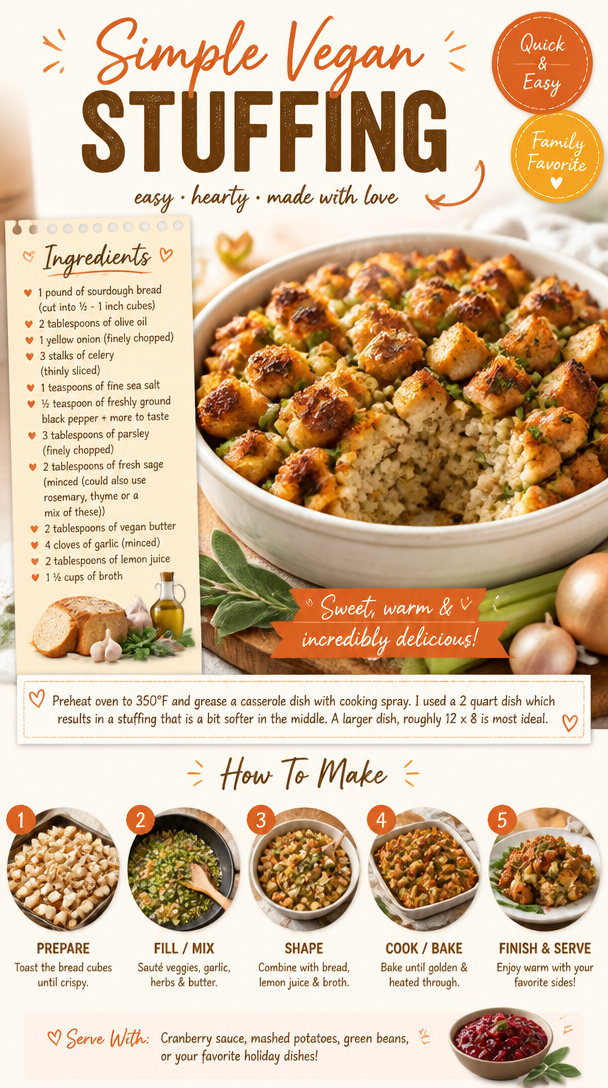
sourdough bread: Provides a tangy flavor and a chewy texture that forms the foundation of the stuffing.
olive oil: Adds richness and allows the vegetables to sauté beautifully over heat.
yellow onion: Introduces a sweet and savory base flavor as it cooks down.
celery: Contributes a fresh, crunchy texture, enhancing the stuffing’s overall mouthfeel.
fine sea salt: Enhances the flavors of the ingredients, ensuring a well-seasoned dish.
freshly ground black pepper: Adds a hint of warmth and depth to the mixture.
parsley: Imparts a fresh, vibrant element that brightens the stuffing.
fresh sage: Provides an earthy aroma and flavor that is essential for that classic stuffing essence.
vegan butter: Ensures a rich, buttery flavor while keeping the dish plant-based.
garlic: Infuses the stuffing with a bold, aromatic flavor that complements the herbs.
lemon juice: Adds a zesty brightness, balancing the richness of the other ingredients.
broth: A flavorful base that moistens the bread and enhances the overall taste of the stuffing.
How to Make Simple Vegan Stuffing
STEP 1. Preheat the oven. Set your oven to 350°F (175°C) and grease a 2-quart casserole dish with cooking spray.
STEP 2. Prepare the bread. Place the sourdough bread cubes on a large baking tray and lightly spray with cooking spray.
STEP 3. Bake the bread. Bake for 25-30 minutes until the bread is crispy but not too hard, then transfer to a large bowl.
STEP 4. Sauté the vegetables. In a large skillet over medium heat, heat the olive oil.
STEP 5. Add onion and celery. Once hot, add the finely chopped onion, sliced celery, salt, pepper, parsley, and sage, sautéing for 5 minutes.
STEP 6. Incorporate garlic and butter. Add minced garlic and vegan butter, cooking for an additional 3 minutes.
STEP 7. Mix the bread and veggie mixture. Combine the sautéed vegetables into the bowl with the bread cubes, tossing lightly.
STEP 8. Add liquids. Pour in the fresh lemon juice and broth, mixing until the bread is lightly damp.
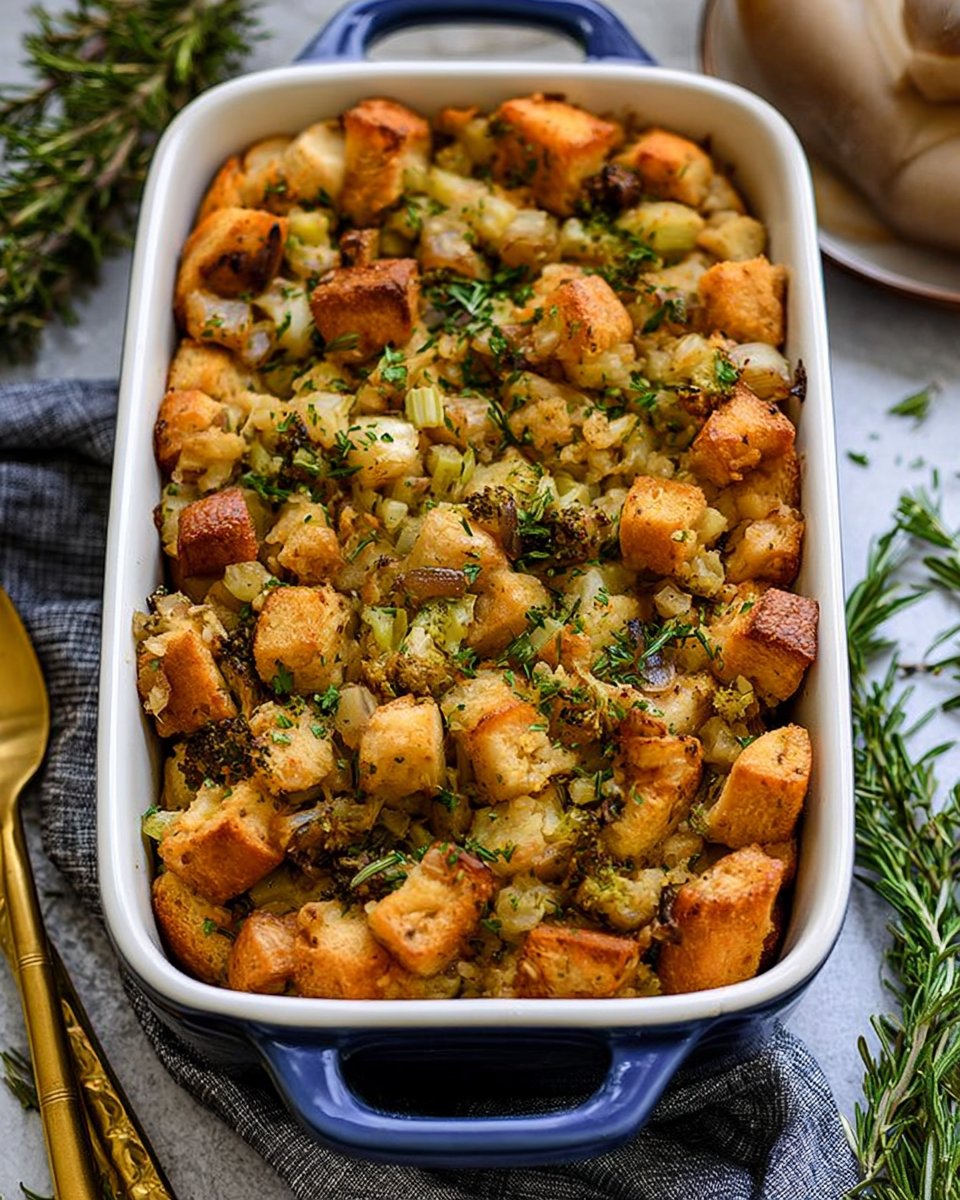
STEP 9. Transfer to baking dish. Pour the mixture into the prepared casserole dish and bake for 45-50 minutes.
STEP 10. Monitor doneness. After 30 minutes, check the top; if it’s getting too dark, cover with foil for the remainder of the bake.
Pro Tips
For optimal flavor and texture, use stale bread. It absorbs the broth better and results in a perfect stuffing consistency. Additionally, feel free to customize the herb selection based on your preference; rosemary or thyme can be excellent alternatives to sage. Don’t shy away from experimenting with add-ins like nuts or dried fruits for a delicious twist. If you’re short on time, you can prepare the vegetable mixture in advance and assemble the stuffing right before baking. Always ensure the bread is adequately toasted; this prevents it from becoming too mushy during baking. Lastly, consider serving this alongside your favorite plant-based gravy to elevate the dish even further for an unforgettable culinary experience.
Common Mistakes to Avoid
One common mistake when making stuffing is not to adequately toast the bread. Soft or stale bread can lead to a mushy texture that leaves much to be desired. Always ensure that you bake your bread cubes until they’re just crispy. Another error is skimping on the seasoning. Properly seasoning each component is key to a flavorful stuffing; don’t be afraid to taste as you go. It’s also essential to check the broth’s temperature; using cold broth can cool down the mixture and affect how well it absorbs during the baking process. Lastly, avoid packing the stuffing too tightly into the baking dish, which can prevent it from baking evenly. Allow enough space for it to rise and develop a beautiful crust.
Variations
• Use gluten-free bread for a gluten-free version.
• Add sautéed mushrooms for an earthy flavor.
• Incorporate diced apples or cranberries for a touch of sweetness.
• Substitute other herbs like thyme or rosemary for a different taste.
• Mix in chopped walnuts or pecans for added crunch.
Serving Ideas
This vegan stuffing pairs beautifully with roasted vegetables or a hearty green salad. For a classic holiday meal, serve it alongside a vegan roast or lentil loaf. It also makes for a delicious side dish on a weeknight, complementing any vegetarian or vegan entree. You may want to utilize it as a filling in savory pastries or stuffed bell peppers for a creative twist. If you have leftovers, this stuffing can be served at breakfast topped with avocado or used as a savory toast topping.
Meal Prep & Storage
This stuffing can be prepared ahead of time, making it ideal for meal prep. Assemble the mixture, store it in an airtight container in the refrigerator, and bake it fresh when needed. It can be kept in the fridge for up to three days before baking. Leftovers can be stored in a tightly sealed container and will remain fresh for about three to five days. For longer storage, consider freezing the unbaked stuffing. Thaw in the refrigerator overnight before baking for the best results. Reheat any leftovers covered in the oven to keep them from drying out.
FAQs
Can you make vegan stuffing ahead of time?
Absolutely! You can prepare the stuffing a day in advance and store it in the fridge to save time.
What type of bread should be used?
Sourdough bread is recommended for its texture and flavor, but feel free to use your favorite bread or even gluten-free options.
Can you add protein to vegan stuffing?
Yes! Consider adding cooked lentils or chickpeas for an extra boost of protein.
Is this stuffing gluten-free?
The recipe using sourdough bread is not gluten-free, but you can use gluten-free bread alternatives for a suitable version.
What are some good sides to serve with stuffing?
Stuffing complements roasted vegetables, a refreshing salad, or a savory vegan main dish beautifully.
Conclusion
Crafting a delicious vegan stuffing is easier than you might think. With its amazing flavors and comforting texture, this dish promises to be a hit at any gathering or family dinner. You’ll find yourself craving its rich taste long after the last of the leftovers is gone. Embrace the season with a recipe that’s not just memorable but also kind to everyone at the table. Happy cooking!
Vegan Stuffing
Ingredients
Bread Base
- 10 oz sourdough bread Use stale sourdough for best results.
Vegetable Mixture
- 2 tbsp olive oil For sautéing the vegetables.
- 1 medium yellow onion Finely chopped.
- 2 stalks celery Sliced.
- 1 tsp fine sea salt
- 1/2 tsp freshly ground black pepper
- 1/4 cup parsley Fresh, chopped.
- 2 tbsp fresh sage Chopped.
- 1 tbsp vegan butter
- 3 cloves garlic Minced.
- 2 tbsp lemon juice
- 2 cups broth Vegetable broth recommended.
Instructions
Preparation
- Preheat the oven to 350°F (175°C) and grease a 2-quart casserole dish with cooking spray.
- Place the sourdough bread cubes on a large baking tray and lightly spray with cooking spray.
- Bake the bread for 25-30 minutes until crispy but not too hard.
- Transfer the crispy bread to a large bowl.
Cooking
- In a large skillet over medium heat, heat the olive oil.
- Add the chopped onion and sliced celery, along with salt, pepper, parsley, and sage. Sauté for 5 minutes.
- Add minced garlic and vegan butter, cooking for an additional 3 minutes.
- Combine the sautéed vegetables with the bowl of bread cubes, tossing lightly.
- Pour in the fresh lemon juice and broth, mixing until the bread is lightly damp.
- Transfer the mixture into the prepared casserole dish.
- Bake for 45-50 minutes, monitoring doneness. If the top gets too dark, cover with foil.