
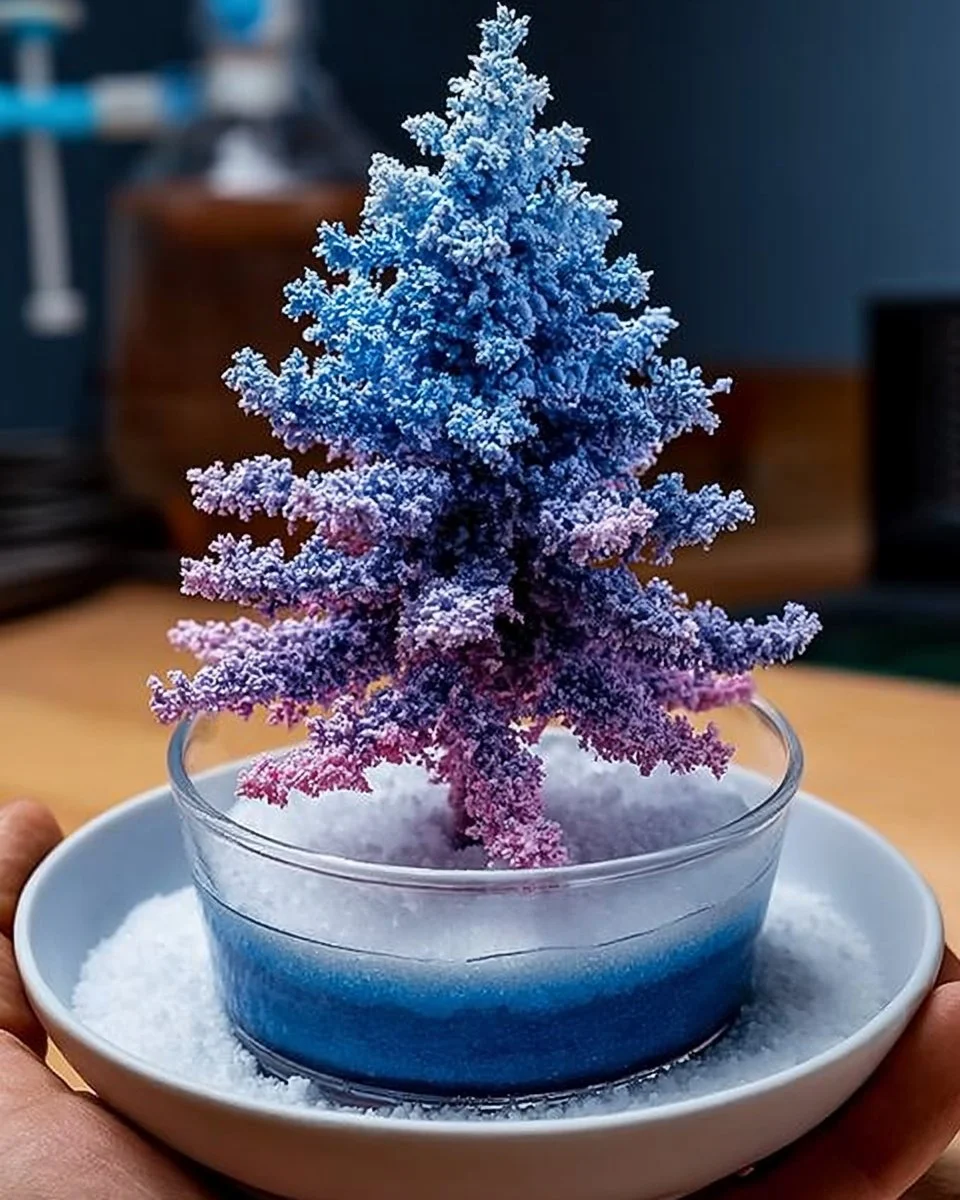
Engaging children in science experiments opens gateways to learning, igniting curiosity, and creating memorable experiences. One delightful endeavor is crafting a stunning baking soda crystal tree. This captivating activity combines the excitement of a science experiment and the beauty of growing crystals, transforming an everyday kitchen item into a mesmerizing creation. Imagine watching as the crystals slowly unfurl, revealing their sparkling shapes and intricate patterns over time.
The joy of seeing the transformation is only matched by the fascinating chemical reaction involved. As they grow, these crystals not only catch the eye but also provide an excellent hands-on opportunity to learn about science and chemistry. It’s a delightful way to spend an afternoon, blending education with creativity in a way that will leave lasting impressions. Ready to dive into this fun-filled activity? Let’s explore how to create this beautiful baking soda crystal tree!
Quick Answer
Creating a baking soda crystal tree is an engaging science project that teaches kids about chemical reactions while making a visually stunning decoration.
Why You’ll Love This Recipe
This baking soda crystal tree project is more than just a crystal-making experience; it’s a fun educational journey.
- Engaging and educational for all ages.
- Visually stunning results that can be displayed.
- Involves simple, readily available ingredients.
- Fosters creativity and artistic expression.
- Promotes scientific understanding and curiosity.
- A perfect group or family activity for hands-on learning.
- Offers measurable outcomes, encouraging patience and observation.
What Makes This Recipe Special
This baking soda crystal tree project uniquely combines chemistry and creativity. By using common household ingredients, it presents a simple yet fascinating scientific reaction that captivates both young and old. The process of creating crystals illustrates fundamental principles of chemistry, specifically how supersaturated solutions work. Watching crystals form enhances understanding of solubility and crystallization, making it an excellent educational tool.
The vibrant colors and intricate shapes produced during the crystallization process spark joy and inspiration, motivating participants to explore further scientific endeavors. As the project unfolds, it teaches about patience, as the best results come with time, showcasing the beauty of gradual transformation. This activity is not only a fun craft but also a stepping stone to future explorations in science.
Kitchen Tools You’ll Need
- Glass jar – Ideal for displaying your growing crystal tree.
- Stirring stick – Used to mix your solution thoroughly.
- string – Essential for creating the structure of your crystal tree.
- food coloring – Optional, for adding visual appeal to your crystals.
- measuring spoons – For accurate measurement of ingredients.
Ingredients
baking soda: The base ingredient that forms the crystals as it interacts with vinegar during the reaction.
vinegar: Reacts with baking soda to create carbon dioxide gas, leading to the formation of crystals.
water: Solvent that helps dissolve baking soda, allowing it to crystallize properly.
food coloring: Adds vibrant colors to the crystals, making them visually appealing.
Ready to cook? Scroll to the recipe card below for exact measurements.
How to Make Create a Stunning Baking Soda Crystal Tree with Fun Science Reactions
Phase 1 – Prep
STEP 1. Prepare your jar. Ensure your glass jar is clean and ready for crystal growth.
STEP 2. Create the baking soda solution. Mix baking soda and water in the jar until dissolved fully.
Phase 2 – Cook
STEP 3. Mix the vinegar. Slowly add vinegar to the baking soda solution to initiate the reaction.
STEP 4. Wait for reaction completion. Allow the fizzing to settle down completely before proceeding.
STEP 5. Add food coloring. If desired, stir in food coloring to the mixture for colored crystals.
Phase 3 – Serve
STEP 6. Insert the string. Tie the string to create a small tree structure, then place it in the jar.
STEP 7. Monitor crystal growth. Let the jar sit undisturbed to allow crystals to form over several hours or days.
Why This Recipe Works
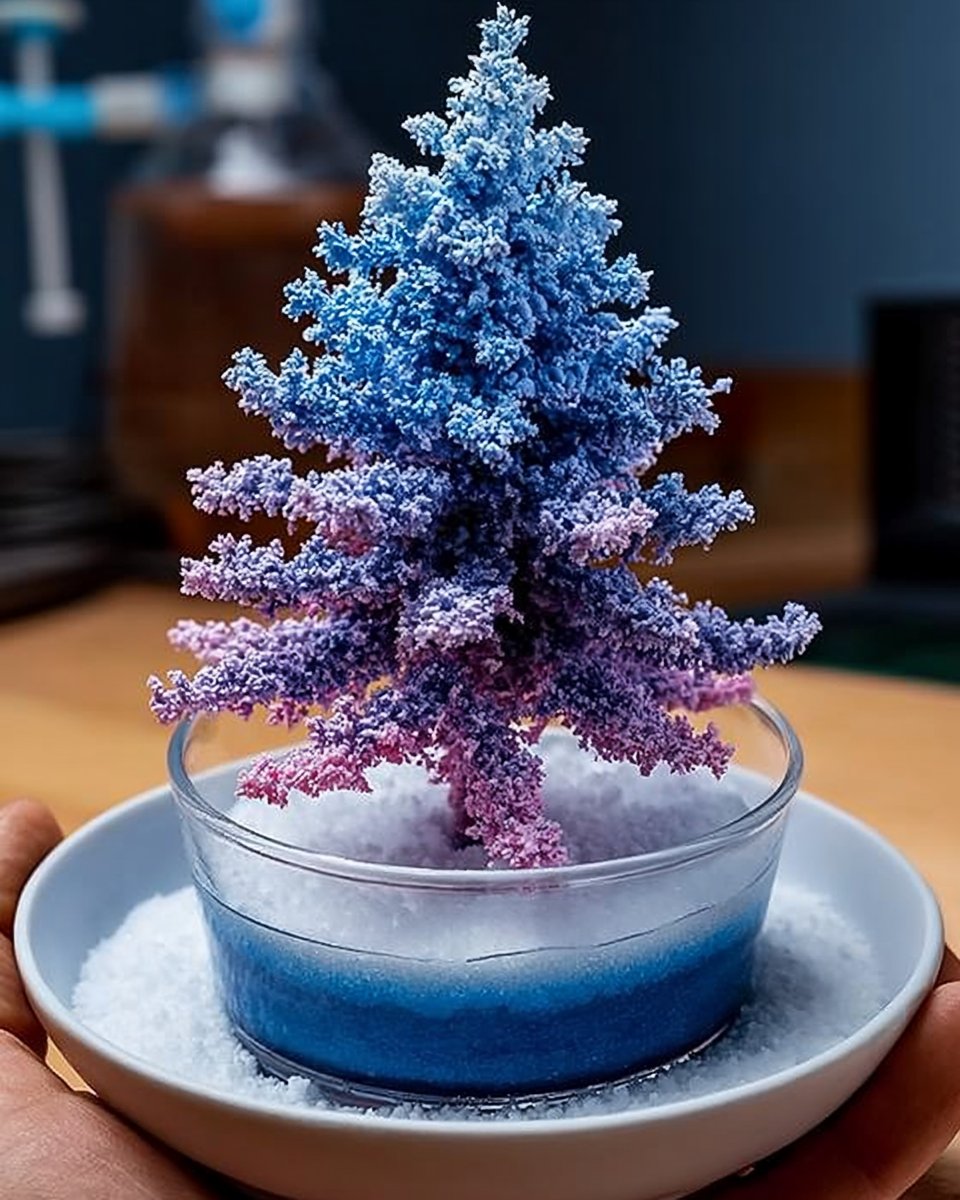
This project effectively balances creativity and scientific education, making it uniquely beneficial. The baking soda and vinegar reaction creates a supersaturated solution, ideal for crystallization. As the solution cools and water evaporates, the baking soda forms solid crystals. This spontaneous creation forms intricate shapes due to the controlled environment within the jar. The gradual buildup of crystals allows for stunning visual results while teaching concepts like solubility and evaporation.
The interaction of ingredients plays a crucial role in achieving the desired texture and appearance of the tree. As each crystal forms, they add to the tree’s structure, resulting in a rich and sparkling display. The overall method nurtures patience and careful observation, rewarding participants with beautiful outcomes and a deeper appreciation for the marvels of chemistry.
Pro Tips
For the best experience, ensure that your baking soda solution is fully dissolved before adding vinegar. If using the food coloring, add it gradually to observe how it changes the crystal color as they form. Make sure to keep the jar in a stable environment to prevent disturbances during crystal growth, which can impact the final appearance. Lastly, document the process through photos to share the results with friends and encourage further exploration of science projects.
Common Mistakes to Avoid
Mistake: Using too much vinegar.
Why it happens: Often, beginners think more vinegar will enhance the reaction.
How to fix it: Stick to the recommended ratio to maintain the proper chemical environment for crystal growth.
Mistake: Disturbing the jar too frequently.
Why it happens: After mixing, there’s a temptation to check on the crystals too often.
How to fix it: Allow the jar to sit undisturbed to ensure optimal crystal growth.
Mistake: Not waiting long enough for crystals to develop.
Why it happens: Impatience can lead to rushing the observation phase.
How to fix it: Allow a full day or more for the best crystal development.
Variations
- Try adding different amounts of food coloring for varied effects.
- Use different structures, like creating an abstract design instead of a tree.
- Experiment with different jar sizes for larger or smaller crystals.
- Incorporate glitter into the solution for a sparkling effect.
Nutrition Highlights
| Nutrient | Role |
|---|---|
| Baking Soda | Used in various recipes; here, it demonstrates basic chemical reactions. |
| Vinegar | Interacts with baking soda for an exciting science project, showcasing the power of acids and bases. |
Serving Ideas
This baking soda crystal tree can be showcased as a centerpiece during educational gatherings or science fairs. It also makes a charming holiday decoration, evoking creativity among guests. Children can present their beautiful creations, explaining the process to family and friends, which enhances communication skills. Overall, use these delightful trees to spark interest in science, blending education with aesthetics seamlessly.
Best Occasions for This Recipe
This project is perfect for various occasions, including science fairs and educational workshops. It’s also an ideal activity for family gatherings or during school break, providing a fun-filled day at home. Using it as a hands-on learning experience in classrooms can foster teamwork and engagement among students. Additionally, the baking soda crystal tree can enhance holiday spirit when themed decor is needed.
Meal Prep & Storage
Meal Prep
Preparation for this project mainly involves gathering ingredients and tools. Ensure all items are clean and organized for a smooth workflow.
Refrigeration
The crystal tree is best displayed uncovered at room temperature, allowing it to maintain its beauty as crystals grow.
Freezing
Freezing is not applicable to this project, as it may halt the crystallization process and ruin the structure.
Reheating
Reheating is not required; simply allow the crystals to grow undisturbed in their jar.
FAQs
How long does it take for the crystals to form?
The crystals can take several hours to days to fully develop, depending on the environmental conditions and the mixture’s concentration.
Can I use other types of crystals instead of baking soda?
Yes, you can experiment with different substances like sugar or salt, but the reactions and outcomes will differ.
What do I do if my crystals aren’t growing?
If crystals aren’t forming, check the concentrations of your ingredients, as a supersaturated solution is crucial for growth.
Is this project safe for kids?
Yes, this project is safe and utilizes household ingredients; however, supervision is recommended for younger children during the process.
Save This Recipe for Later
If you enjoyed making a baking soda crystal tree, consider pinning this project for future crafts or experiments with family and friends!
Conclusion
The baking soda crystal tree offers an engaging way to explore science while producing beautiful results. As you witness the transformation from a simple mixture into sparkling crystals, you’ll experience the joy of discovery firsthand. This project is not only educational but also fosters creativity and patience, making it a favorite among many. Dive into this fun adventure and let science shine through art!